


We'll help you find the right tea for your home Kombucha fermentation
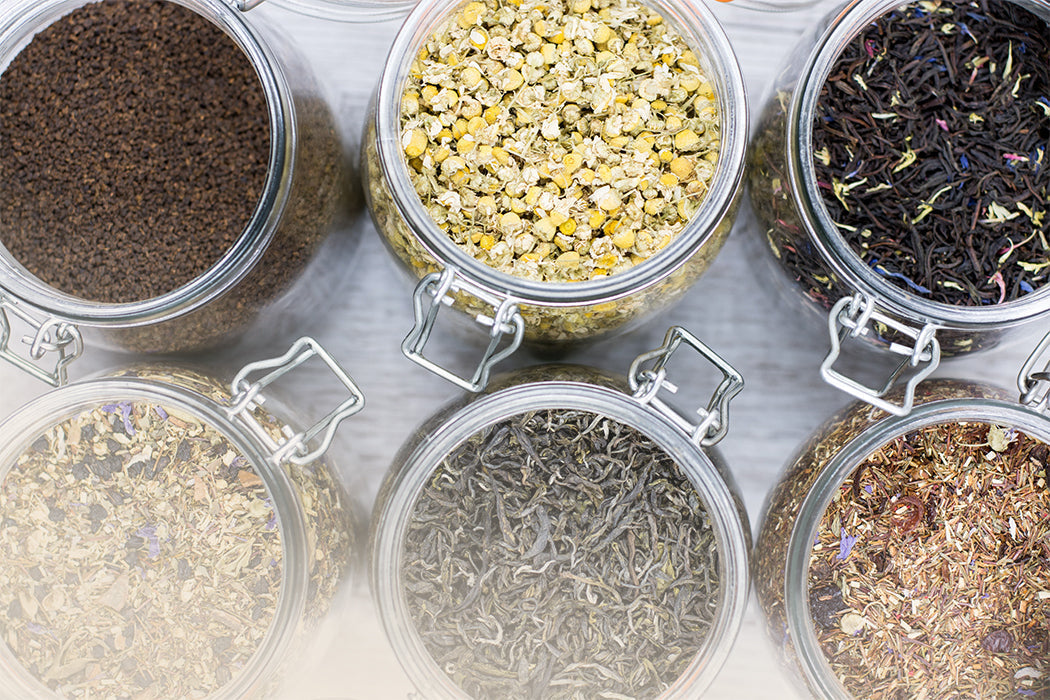
Good and flavorful tea is a basic requirement for a flavorful Kombucha. Already in ancient China, Kombucha was made with the tea plant Camellia Sinensis. The tea plant belongs to the genus Camellia and the family Theaceae. From all parts of the tea plant (buds, leaves, stems and flowers), either black or green tea is produced. Black and green tea are made from the same tea plant. The variations of tea types result from different processing and different conditions during plant cultivation.
Why do you need tea for Kombucha?
The Kombucha culture consists of various bacteria and yeasts. Tea from Camellia sinensis provides the fermentation with polyphenols, nitrogen compounds and other plant components, among other things. Which vitamins are actually present in the finished Kombucha after fermentation and in what quantity depends on the tea, culture, and manufacturing process.
Possible tea varieties for delicious Kombucha
Black Tea
If your Scoby could talk, it would probably advocate for always being combined with black tea. A particularly nutrient-rich base with which it can work quickly and ferments fast.
Our favorites:
- Golden Monkey
- Darjeeling
- Friesenmischung (Assam, Ceylon, Indian Himalaya)
Green Tea
With green tea, you can usually ferment your Kombucha a little faster. It gives a sweet note that is slightly acidic on the finish. However, the Scoby doesn't grow as fast with green tea as it does with black tea.
Our favorites:
- Sencha & Matcha
- New Spring
- Chun Mee
White Tea
White tea, like green and black tea, is made from Camellia sinensis. Caffeine content and polyphenol composition can vary greatly depending on the variety, processing, and preparation. White tea can also be used for Kombucha; how well a culture works with it depends on the specific approach.
Our favorites:
- Silver Needle
- Shou-Mei
- Oolong Tea
Oolong Tea
Oolong tea is a Chinese semi-fermented tea with a long tradition. The sun-dried tea gives a unique taste. Sometimes it tastes a bit smoky or has a sweet honey note. It can be a perfect base for the Scoby and is also a perfect Kombucha companion when mixed with other tea varieties.
Our favorites:
- Red Robe
- Iron Goddess
- Phoenix Mountain
Which water to use for brewing the tea?
It's hard to believe, but water quality plays a major role in fermentation. This rather inconspicuous ingredient can positively and negatively influence your tea mushroom. Conventional tap water may contain residues of chlorine and chemicals, as well as fluorides. These substances can harm the Scoby. Drinking water can generally be suitable for Kombucha fermentation. Whether additional filtration is advisable depends on the specific water composition.
Which tea is not good for your Kombucha?
Important! There are a few simple rules to follow when choosing tea.
- Do not use tea with a high content of essential oils or artificial flavors (e.g., fruit tea, sage or lemon balm tea).
- Preferably use loose tea over bagged tea.
- If you use fruit tea or other tea besides black, green, or white tea – only mix it in – do not use it pure!





Share: