


Dietary Supplements: When They Can Be Useful and What to Consider
In everyday life, it is not always possible to create a varied meal. Dietary supplements can specifically supplement the diet with individual nutrients, especially when an increased need or insufficient supply has been identified. However, they do not replace a varied and balanced diet.
What are dietary supplements and how do they work?
Dietary supplements are products that provide vitamins, minerals, fatty acids, amino acids, phytochemicals, or probiotics in concentrated form. They cannot cure diseases, but merely supplement the diet when the need is higher than the intake through food.
The market ranges from classic vitamin and mineral preparations to omega-3 products, as well as products with bacterial cultures and other ingredients. Whether an additional supply of a specific nutrient is beneficial depends on diet, life stage, individual supply, and, if applicable, medical diagnostics.
However, experts point out that dietary supplements only provide real benefits if there is a proven need or a risk of nutrient deficiency. Without such a need, they often provide no measurable health benefits and can—especially in high doses—even be harmful.
Why not everyone achieves a perfect diet every day
A balanced diet provides the body with energy, protein, essential fatty acids, vitamins, minerals, and fiber, thus forming the basis of daily nutrient supply. It includes sufficient fresh fruits and vegetables, which provide important vitamins, minerals, and phytochemicals, high-quality proteins for muscles, metabolism, and immune function, and a minimal intake of highly processed foods, which often contain many additives, sugar, and unhealthy fats.
However, in daily life, many people do not manage to consistently implement this optimal diet. The reasons are manifold:
-
Lack of time and fast-paced daily life: Long working days, commuting, and obligations lead many to resort to quick convenience foods or take-aways, which are often less nutritious. Preparing fresh meals is difficult under these conditions.
-
Irregular lifestyle: Shift work, frequent travel, or changing working hours disrupt the daily rhythm. Meals are eaten irregularly, snacks often replace full meals, and the body does not consistently receive the nutrients it needs.
-
Dietary habits and restrictions: Vegetarian or vegan diets, food intolerances, or allergies can limit the choice of foods. Without careful planning, vitamin B12, iron, zinc, or omega-3 fatty acids are often missing.
If such factors persist over a longer period, the range of important micronutrients that the body can absorb through diet automatically decreases. An adequate supply of vitamins and minerals is part of a balanced diet.
In certain situations, dietary supplements can be useful to specifically supplement the diet with individual nutrients. Whether this is necessary depends on the respective nutrient, the personal supply, and individual needs. Dietary supplements supplement the diet and do not replace it.
When is a supplement really useful?
Vitamin D – important when the sun is missing
Vitamin D can be produced by the body under the influence of sunlight and can also be absorbed through certain foods or dietary supplements. Vitamin D contributes to the maintenance of normal bones and muscle function, as well as to the normal function of the immune system. Whether an additional intake is beneficial depends on the individual supply.
Vitamin B12 – especially with a vegan diet
Vitamin B12 occurs naturally mainly in foods of animal origin. Vitamin B12 contributes, among other things, to the normal function of the nervous system, a normal energy metabolism, and the normal formation of red blood cells. Therefore, a vegan diet should pay particular attention to an adequate supply.
Iron – when the store is empty
Iron is an essential mineral and contributes, among other things, to the normal formation of red blood cells and hemoglobin, as well as to normal oxygen transport in the body. Whether an additional intake is necessary should be clarified by a specialist or medical professional, especially if an insufficient supply is suspected.
Folic acid – essential before and during pregnancy
Folic acid is crucial for cell division and the development of the nervous system in the embryo. Studies show that adequate folic acid intake in the first weeks of pregnancy significantly reduces the risk of neural tube defects. Here, too, supplementation is clearly indicated, especially before and in early pregnancy.
Omega-3 fatty acids – functions and scientific classification
Omega-3 fatty acids belong to the polyunsaturated fatty acids. EPA and DHA are mainly found in oily marine fish and fish oil, while plant-based foods such as flaxseed, chia, and walnuts primarily provide alpha-linolenic acid.
Omega-3 preparations are offered as fish oil, algae oil, or combination products, among others. The amounts of EPA and DHA contained vary depending on the product.
Bacterial cultures & Kombucha – differences and classification
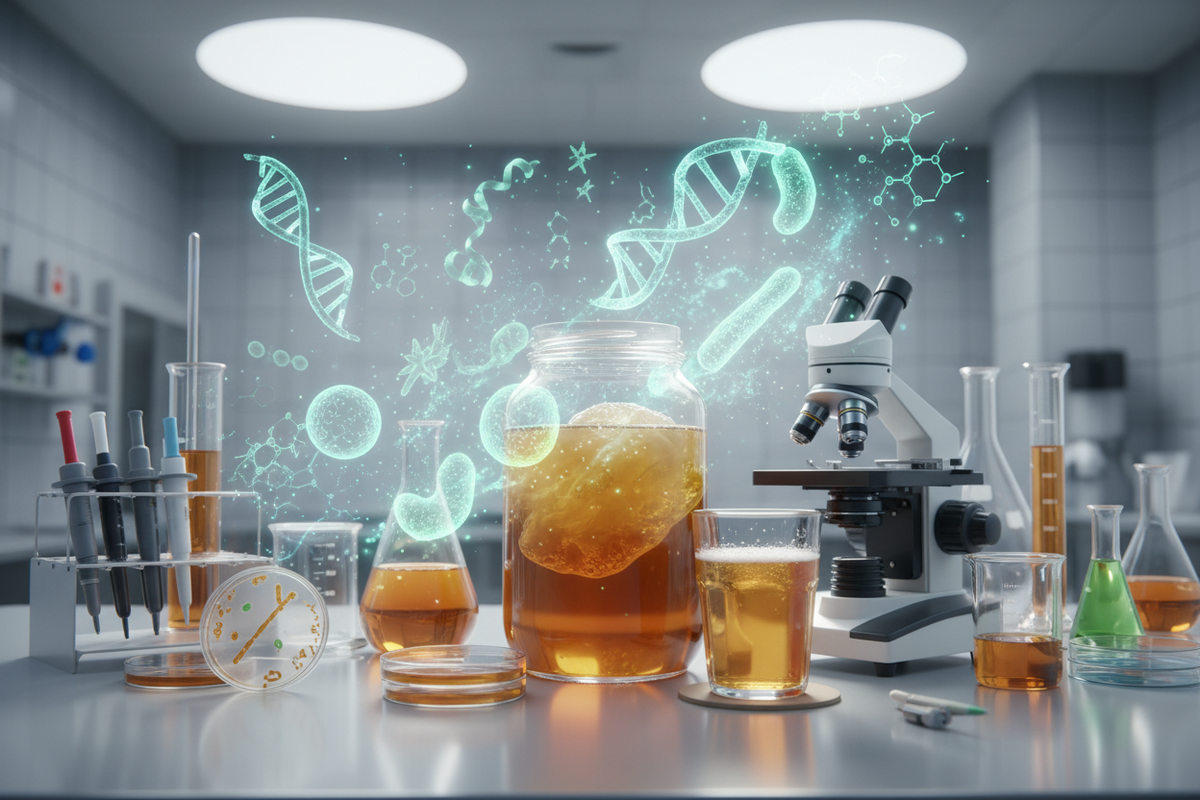
Probiotic dietary supplements contain specifically selected living microorganisms. Kombucha, on the other hand, is a fermented tea drink whose exact composition depends heavily on cultures, tea, fermentation duration, and production.
In unpasteurized kombucha, living microorganisms and various natural fermentation products can be preserved. This clearly distinguishes kombucha from classic soft drinks, but it is not equivalent to a standardized probiotic dietary supplement.
Trend Supplements and Frequently Advertised Ingredients
1. Longevity & Cell Health
In addition to already known supplements such as spermidine, astaxanthin, and collagen, other substances are currently coming into focus, which are primarily intended to support NMN and NR:
-
NMN (Nicotinamide Mononucleotide) & NR (Nicotinamide Riboside)
These compounds are precursors of NAD⁺, a crucial coenzyme needed in almost every cell for energy metabolism, metabolism, and DNA repair. NMN and NR are currently being scientifically investigated, including with regard to various metabolic parameters. Some of the research comes from animal and preclinical studies. Results from these cannot be directly transferred to humans or to specific health effects of supplementation. -
Resveratrol
Resveratrol is a plant polyphenol found in grapes, berries, and red wine, among other things. As a phytochemical, it is often used in dietary supplements and so-called longevity products. -
Spermidine
Spermidine is a naturally occurring polyamine found, for example, in wheat germ, soybeans, mushrooms, and peas. The substance also occurs naturally in the human body and is often used in dietary supplements in the longevity sector.
2. Skin, Hair & Beauty (Beauty & Appearance)
Many dietary supplements are now marketed with a focus on skin, hair, nails, and connective tissue.
-
Collagen
Collagen is an endogenous structural protein and a component of skin, connective tissue, cartilage, bones, and tendons. Collagen hydrolysate and collagen peptides are now often offered as powders, capsules, or as a component of beauty and sports products. -
Zinc & Biotin
Certain micronutrients fulfill important functions for skin, hair, and nails. Whether an additional intake is beneficial depends on the supply and individual needs. -
Vitamin C + E + K Combinations
Vitamin C, Vitamin E, and Vitamin K fulfill different functions in the body. Vitamin C contributes, among other things, to the protection of cells from oxidative stress and to normal collagen formation for normal skin function. -
Astaxanthin & Coenzyme Q10
Astaxanthin is a natural pigment from the group of carotenoids. Coenzyme Q10 is an endogenous compound that also occurs in various foods. Both substances are often used in beauty and longevity supplements.
3. Micronutrients and Mental Performance
Products related to focus and mental performance have also developed into their own category in the supplement market.
-
Lion's Mane (Hericium erinaceus mushroom)
Lion's Mane, also called Hericium erinaceus, is an edible mushroom traditionally used primarily in East Asia. Today it is also offered as a powder, extract, and component of various dietary supplements. -
L-Theanine + Caffeine Combination
L-Theanine and caffeine are often used together in nootropics and products for focus and concentration. -
Rhodiola Rosea
Rhodiola rosea, also called rose root, is a plant traditionally used as an adaptogen. In scientific studies, Rhodiola is investigated, among other things, in connection with stress, fatigue, and mental performance. However, the results depend on the extract, dosage, study population, and study design and do not allow for a general statement of efficacy for Rhodiola products.
4. Fitness, Muscles & Regeneration
In the sports sector, various dietary supplements are offered, including creatine, protein products, collagen peptides, beta-alanine, and BCAAs:
-
Collagen Peptides
Collagen peptides are particularly often used in products from the beauty, nutrition, and sports sectors and are available as powders, capsules, or as a component of mixed products. -
Creatine
Creatine is an endogenous compound and one of the best-known dietary supplements in the sports sector. It is predominantly offered as creatine monohydrate. -
Beta-Alanine & BCAA
Beta-alanine and BCAAs are primarily used in sports and training supplements. BCAAs are branched-chain amino acids; beta-alanine is an amino acid and a component of various pre-workout products.
5. Digestion, Microbiome, and Nutrition
The gut microbiome, digestion, nutrition, and various bodily processes are complexly interconnected and are intensively scientifically investigated.
-
Probiotics & Prebiotics (e.g., Inulin, FOS)
They provide living microorganisms or nutritional components for good bacteria in the gut. Studies investigate different correlations with digestion, microbiome, and immunological parameters depending on the specific pre- or probiotic substance. The results are substance- or strain-specific and cannot be generally applied to all pre- or probiotics. -
Fermented Foods (e.g., Kombucha, Kefir, Brottrunk)
Kombucha, kefir, and other fermented foods can contain living microorganisms depending on the manufacturing process. However, this does not automatically make them probiotics and does not allow for a general statement about an effect on gut flora or digestion. For defined probiotics, possible effects depend on the specifically studied strain, the quantity, and the respective application area.
Caution with Dietary Supplements: Risks and Overdoses
Dietary supplements can be useful in many situations, but should not be taken thoughtlessly. Some preparations pose risks, especially with overdoses, simultaneous intake of other medications, or existing health problems.
Not everyone automatically needs all vitamins, minerals, or antioxidants. Many people take supplements even though there is no proven deficiency—in these cases, they often provide no measurable health benefits and, in the worst case, can even be harmful.
Dangerous Overdoses
-
Fat-soluble vitamins (A, D, E, K): They can be toxic if consumed in too high amounts. Excessive vitamin A can damage the liver, bones, and nervous system. Too much vitamin D can disrupt calcium metabolism and cause kidney problems.
-
Iron: An overdose can cause severe gastrointestinal problems and, with long-term intake, damage organs.
-
Selenium: In high doses, it can cause nausea, hair loss, and nerve damage.
Hormonal or Performance-enhancing Preparations
Substances like DHEA or high-dose testosterone boosters can disrupt the hormonal balance and should only be taken under medical supervision.
Interactions with Medications
Some supplements can affect the action of medications:
-
Omega-3, Vitamin K, or St. John's Wort can, for example, alter blood clotting or the effectiveness of antidepressants.
-
Anyone taking regular medication should always consult a doctor before adding new preparations.
Dietary supplements are supplements and not a substitute for a balanced diet. Whether a product is useful depends on the specific nutrient, the supply, the dosage, and individual needs.
Conclusion & Scientifically Proven Recommendations
Whether a dietary supplement is useful depends on the specific nutrient, the supply, the dosage, and individual needs. Especially with high doses, medication intake, or existing diseases, possible interactions and risks should be considered.
Vitamin D contributes to the maintenance of normal bones and muscle function, as well as to the normal function of the immune system. Vitamin D preparations are available in various dosages.
Vitamin B12 contributes to the normal function of the nervous system, a normal energy metabolism, and the normal formation of red blood cells. It occurs naturally mainly in foods of animal origin and is also a component of numerous dietary supplements.
Omega-3 fatty acids such as EPA and DHA are found primarily in oily marine fish, as well as fish and algae oils. Dietary supplements are offered in various concentrations and dosage forms.
Collagen peptides are hydrolyzed collagen proteins and are often offered as powders, capsules, or as a component of beauty and sports products.
What effects probiotics can have depends on the specific microorganism or bacterial strain studied, the dosage, and the respective application area. What amount is useful for a product with defined bacterial cultures depends on the specific strain studied, the product, and the respective intended use. Fermented foods like kefir or kombucha are not automatically equivalent to a standardized probiotic.
Spermidine is a naturally occurring polyamine found, for example, in wheat germ, soybeans, and mushrooms. It is also offered as a component of various dietary supplements.
To take supplements effectively and safely, it is first important to assess your own needs. Blood tests or nutrient levels can show which substances actually need to be supplemented, thus avoiding unnecessary intake. At the same time, attention should be paid to the quality of the products, as not all supplements are of equal value. High-quality preparations are characterized by tested purity, precise dosage, and transparent ingredients, ideally with corresponding certificates or laboratory analyses. Those who take supplements for a longer period should monitor their effects and tolerability. Regular breaks or medical check-ups help to minimize risks and maintain the optimal dosage. It always applies: dietary supplements do not replace a balanced diet, exercise, and sufficient sleep. Rather, they can serve to supplement the diet with specific nutrients when there is a concrete need.
A needs-based selection can help to avoid unnecessary intake and to supplement the diet with individual nutrients. In cases of high dosages, prolonged use, medication, or existing illnesses, the individual situation should be professionally clarified.
nahrung.de – “Meaningful Food Supplements: Overview & Effects”
Zhang et al., 2021 – “Omega-3 Fatty Acids and Cardiovascular Outcomes: An Umbrella Review of Meta-Analyses”
Verbraucherzentrale Deutschland – “Who heals is right? Which studies can be trusted?”







Share: