product image

select caret down
Login

Note: The content of this article is for general information purposes only. It does not replace medical or nutritional advice and does not constitute health-related statements about our products.

– Before you read on –

We don't just know everything about Kombucha ...

We also brew the best raw kombucha ourselves. If you're thirsty, stop by our shop and see for yourself!

Try kombuchery

Support more than just your gut and immune system. Kombucha can do even more.

A kombucha a day keeps the doctor away! That's how it could soon be said, because just one kombucha can contain more nutrients than an apple.

Kombucha is a fermented tea drink created with the help of a kombucha culture (Symbiotic Culture of Bacteria and Yeast). A symbiosis of bacteria and yeasts through which, at the end of fermentation, a healthy and refreshing tea drink with many enzymes and nutrients can be produced. Kombucha is the perfect addition to a balanced diet, whether vegetarian, vegan, paleo, or a raw food diet. The many living, beneficial bacteria from kombucha can be integrated into almost any diet and help your gut stay in a healthy balance and ward off bad bacteria.

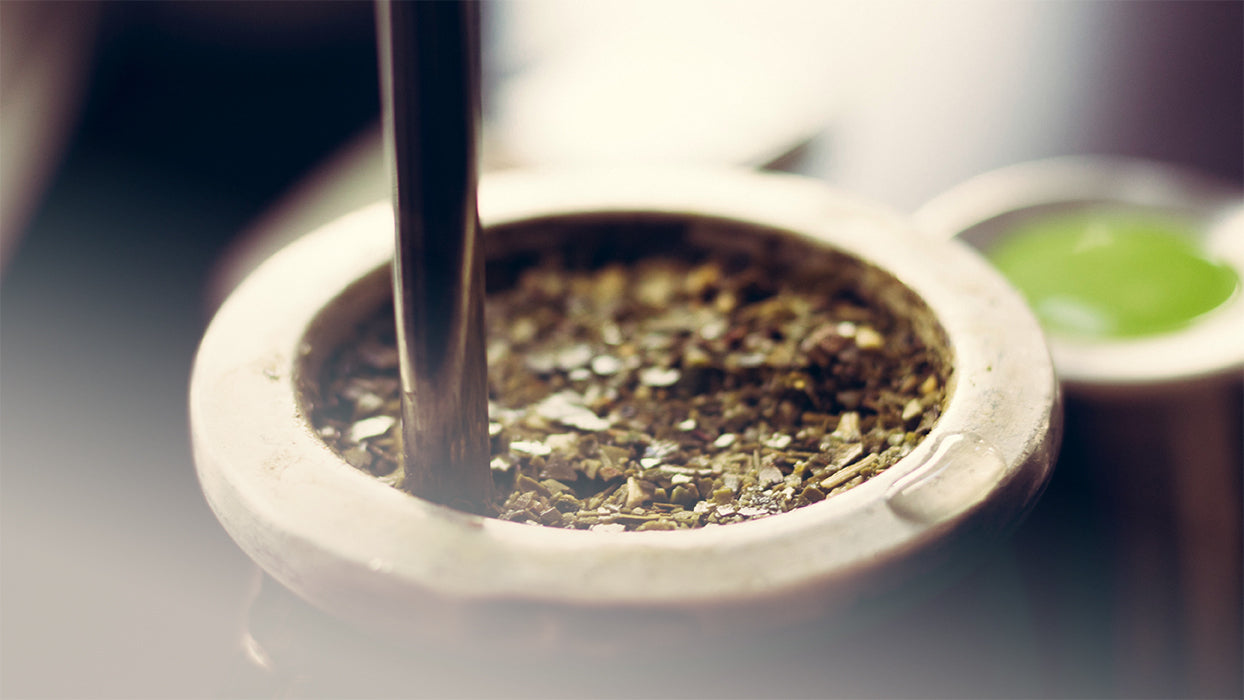
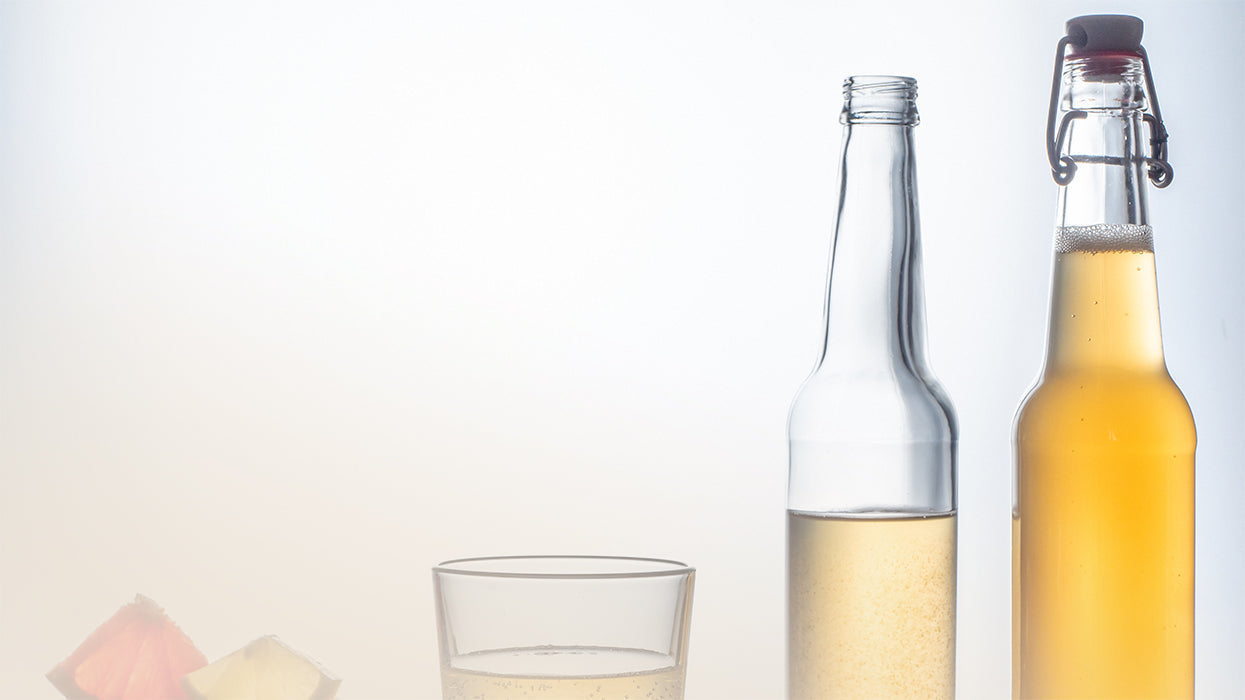
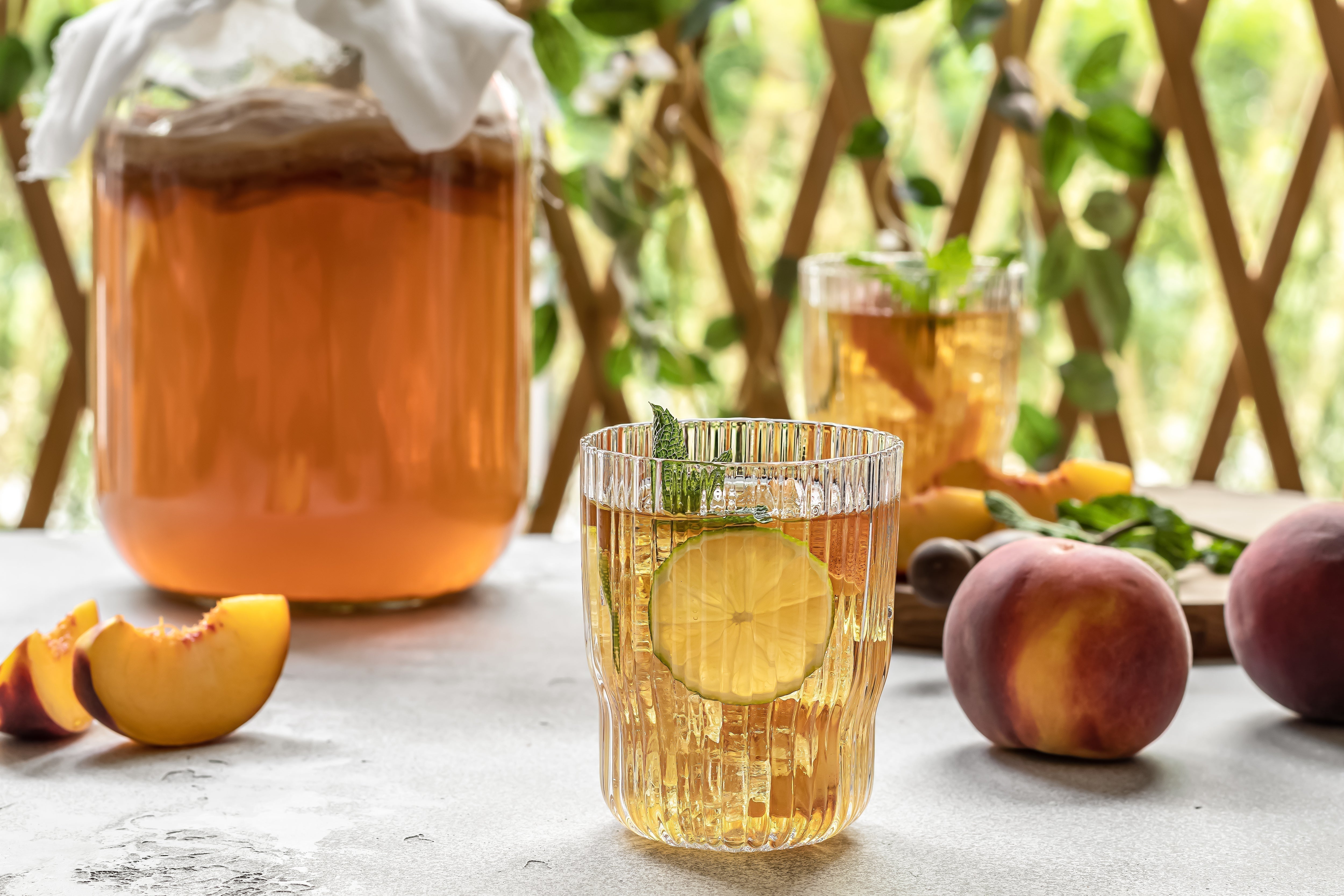
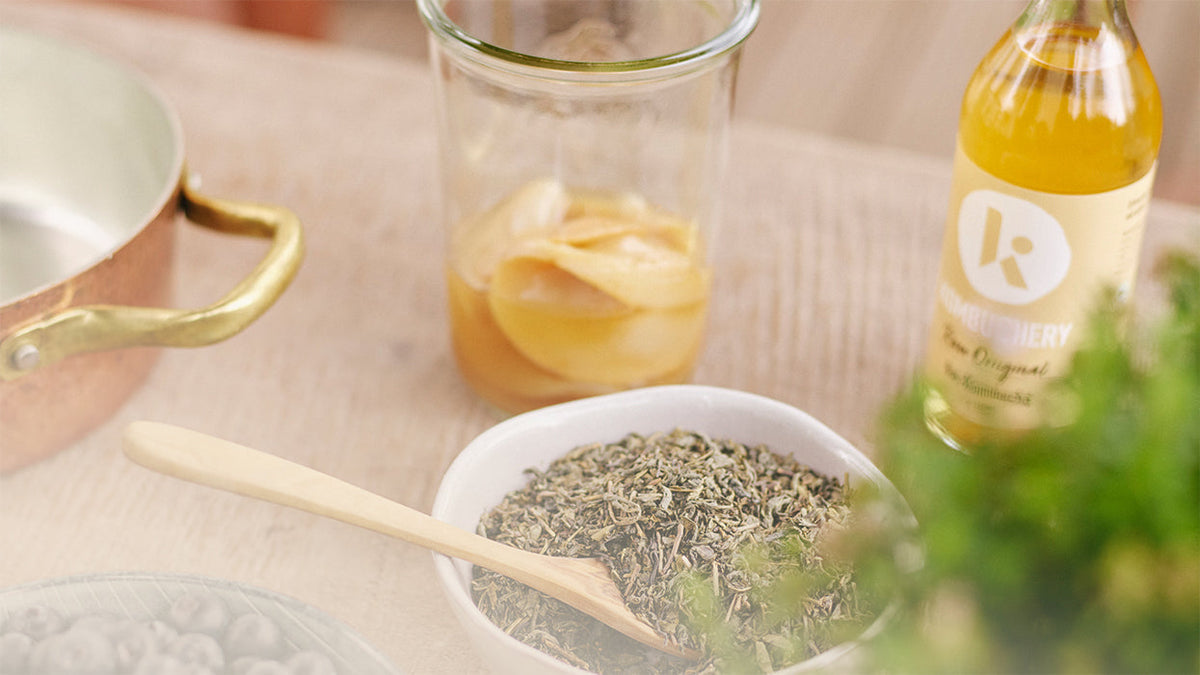
large glass with kombucha, covering cloth, glass with kombucha, bowl of loose tea

How is Kombucha made?

For thousands of years, real, unpasteurized kombucha has been made using a similar process. A symbiosis of yeast cultures and bacteria is added to sweetened tea and then begins to ferment. During this process, the fermentation of kombucha, the sugar is metabolized by the kombucha culture over several days, and important nutrients and enzymes can be created. At the end of fermentation, only a small amount of sugar remains in the kombucha. The majority of the sugar has then already been utilized by the kombucha culture. Mostly, the fermentation of kombucha is carried out with a tea base of black or green tea, but other tea varieties can also be a delicious option with some experience.

How can regular kombucha consumption help your body?

After fermentation, kombucha contains numerous ingredients that are biologically valuable for the organism: Organic acids such as glucuronic acid, dextrorotatory lactic acid and acetic acid, polysaccharides, as well as enzymes, vitamins, and minerals. (1)

The acetic acid it contains stimulates metabolism and can help the body break down fat and protein. The enzymes it contains help the gut break down food into its individual components and regulate metabolic processes. (1)

Despite all its positive properties, kombucha is not a miracle cure, but regularly integrated into daily life, it is a wonderful way to supplement a healthy diet with nutrients and support the gut.

The body can be slowly introduced to the sweet and sour drink. For example, you can start with just one glass every morning and observe how it affects you. See if you notice a positive change in your body after a few weeks. The sweet and sour taste is unusual for some at first, but the more often you drink kombucha and the more sensitive your taste buds become, the more you will like this delicious and super thirst-quenching tea drink.

All Kombucha benefits at a glance

  • Supports healthy gut bacteria
  • Supports liver function
  • Accelerates metabolic processes
  • Helps digestion and the gut
  • Boosts energy levels
  • Reduces blood pressure
  • Helps against headaches and migraines
  • Destroys free radicals (2)

(1) Hessmann-Kosaris A, Naturally healthy with Kombucha, Augsburg, 1999.
(2) Hannah Crum, Alex LaGory, The Big Book of Kombucha, 2016

Leave a comment

Please note, comments need to be approved before they are published.

This site is protected by hCaptcha and the hCaptcha Privacy Policy and Terms of Service apply.

Note: This article is intended for informational purposes only and should not be construed as professional analysis, advice, or medical information. It contains the author's personal opinion based on researched literature and personal experience on the subject.

Recommended articles for you

You can find more of my articles, from A, like non-alcoholic kombucha cocktails, to Z, like lemon-ginger kombucha, on our Kombuchery blog. Let's learn more about kombucha together!

View all

Kombucha Guide Berlin: Die 10 besten Cafés & Restaurants in 5 Bezirken

Kombucha Guide Berlin: The 10 Best Cafes & Restaurants in 5 Districts

Urban Wellness in Berlin: 5 Neighborhoods Where You'll Find Great Kombucha Berlin is one of Europe's most exciting cities when it comes to modern food and drink culture. Kombucha is no longer a niche product here, but part of a...

Read moreabout Kombucha Guide Berlin: The 10 Best Cafes & Restaurants in 5 Districts

Wer kann mehr? Der Vergleich: Kombucha, Brottrunk & funktionale Limonaden

Who Can Do More? The Comparison: Kombucha, Brottrunk & Functional Lemonades

In recent years, the range of beverages available has changed significantly. In addition to classic soft drinks, more and more fermented beverages and so-called functional lemonades are available in supermarkets today. Particularly popular are kombucha, kvass, and modern lemonades with...

Read moreabout Who Can Do More? The Comparison: Kombucha, Brottrunk & Functional Lemonades

Kombucha und seine Wirkung: Wissenschaftliche Studien zu Inhaltsstoffen, Fermentation und Gesundheit

Kombucha and Its Effects: Scientific Studies on Ingredients, Fermentation, and Health

Kombucha is one of the most intensively researched fermented beverages in recent years. Modern microbiological, nutritional, and clinical studies show that the drink possesses an exceptionally complex biochemical composition. During fermentation, numerous bioactive compounds are formed, including organic acids, polyphenols,...

Read moreabout Kombucha and Its Effects: Scientific Studies on Ingredients, Fermentation, and Health

🌍 World Kombucha Day am 21. Februar: Geschichte, Fakten & Tipps zum Feiern

🌍 World Kombucha Day on February 21: History, Facts & Tips for Celebrating

Celebrate the Effervescent History of Kombucha Every year on February 21st, kombucha fans worldwide celebrate World Kombucha Day. But why exactly does this day exist? It's simple: it's a tribute to a beverage that has delighted, inspired, and refreshed people...

Read moreabout 🌍 World Kombucha Day on February 21: History, Facts & Tips for Celebrating

Die besten Nahrungsergänzungsmittel: Gesundheit gezielt stärken ohne Risiko

The Best Nutritional Supplements: Targeted Health Boosts Without Risk

Dietary Supplements: Beneficial for all who can't live perfectly healthy every day In a stressful everyday life, many people can't always manage to eat optimally healthy every day. Shift work, long days in the office, little time for fresh cooking,...

Read moreabout The Best Nutritional Supplements: Targeted Health Boosts Without Risk

Darmkuren im Check: Was wirklich wirkt

Bowel Cleanses Under Scrutiny: What Really Works

Colon cleanses, detox programs, and so-called "bowel purifications" have enjoyed great popularity for years. They promise a fresh start for the body, more energy, better digestion, and increased well-being. Especially in the context of gut health, such promises seem plausible...

Read moreabout Bowel Cleanses Under Scrutiny: What Really Works

Präbiotische/ probiotische Hautpflege: Hilft sie wirklich?

Prebiotic/probiotic skincare: Does it really work?

Prebiotic and Probiotic Skincare: Trend or Scientifically Effective? The Skin Microbiome: A Complex Ecosystem The skin is the largest human organ and a complex ecosystem inhabited by a multitude of microorganisms, collectively known as the skin microbiome. This consists of...

Read moreabout Prebiotic/probiotic skincare: Does it really work?

Wozu braucht der Körper Präbiotika?

Why does the body need prebiotics?

Prebiotics are often overshadowed by their more well-known "relatives," probiotics. While probiotics are living microorganisms that we ingest through food or supplements, prebiotics serve as food for the beneficial bacteria in the gut. They are, so to speak, the fuel...

Read moreabout Why does the body need prebiotics?

Wie viel Kombucha ist gut für dich?

How much kombucha is good for you?

How much kombucha is good for me? Our tips on dosage, duration of use and what your body really needs Kombucha is more than just a trendy drink - it's alive, naturally fermented, and packed with microorganisms. But how much...

Read moreabout How much kombucha is good for you?

Neue Rezeptur mit Vitamin C aus Acerola: *Vitamin C trägt zu einer normalen Funktion des Immunsystems, einem normalen Energiestoffwechsel sowie zum Schutz der Zellen vor oxidativem Stress bei.
  • Vitamin C trägt zu einer normalen Funktion des Immunsystems bei.
  • Vitamin C trägt zu einer normalen psychischen Funktion bei.
  • Vitamin C trägt zu einem normalen Energiestoffwechsel bei.
  • Vitamin C trägt zur Verringerung von Müdigkeit und Ermüdung bei.
  • Vitamin C trägt zu einer normalen Funktion des Nervensystems bei.
  • Vitamin C trägt dazu bei, die Zellen vor oxidativem Stress zu schützen.
  • Vitamin C trägt dazu bei, die reduzierte Form von Vitamin E zu regenerieren.
  • Vitamin C trägt zu einer normalen Kollagenbildung für eine normale Funktion der Haut bei.
  • Vitamin C trägt zu einer normalen Kollagenbildung für eine normale Funktion der Blutgefäße bei.
  • Vitamin C trägt zu einer normalen Kollagenbildung für eine normale Funktion der Knochen, der Knorpel, der Zähne und des Zahnfleisches bei.
  • Vitamin C erhöht die Eisenaufnahme.